What was wrong with every other score
When we started building the Wellness Score, the options available to health apps were limited. Wearable readiness scores existed but they were early, narrow, and built primarily around recovery from physical exertion. App-based scores were simpler still. Close your rings, hit 10,000 steps, earn your streak. These were engagement mechanics dressed up as health metrics. They measured compliance with a target, not the actual state of someone's wellbeing.
Neither model asked the right question. Readiness scores told you how recovered your body was from yesterday's effort. Step targets told you whether you had moved enough. Neither told you how you were actually doing across the full picture of your health. Sleep, nutrition, mental state, physical activity. All of it together, as a single honest signal.
That was the gap the Wellness Score was built to close.
How we built something different
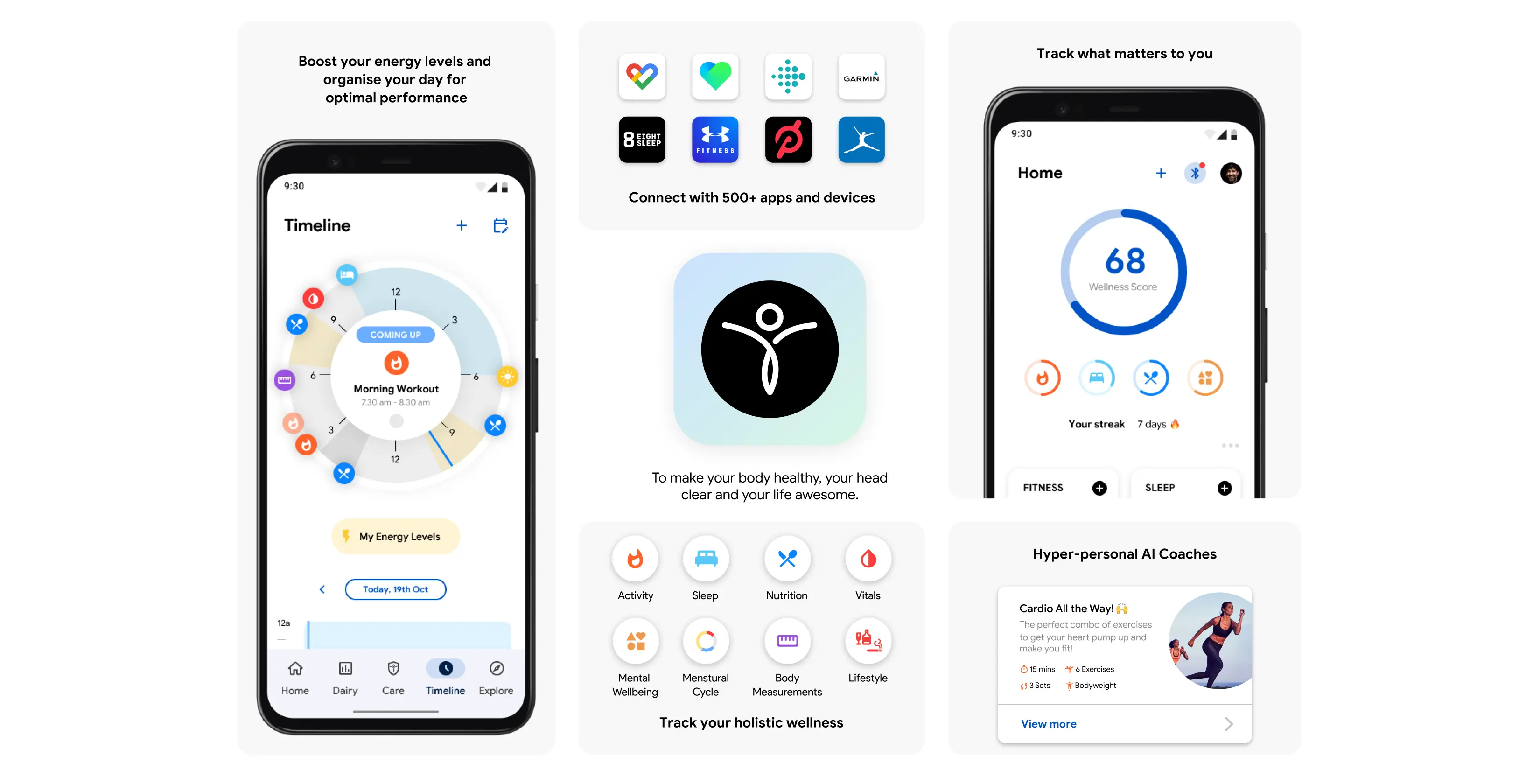
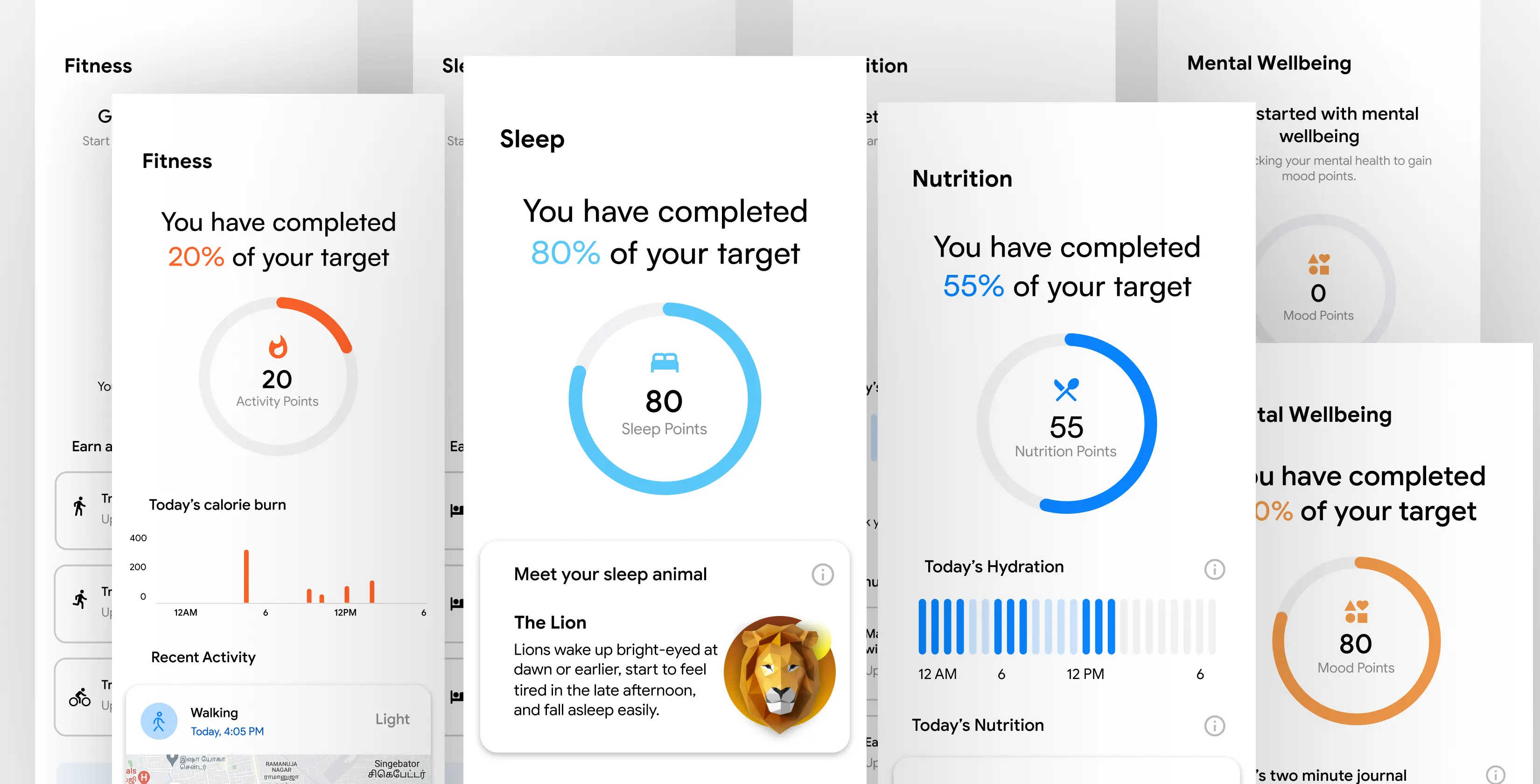
The score calculated a single number daily across four dimensions: Activity, Sleep, Nutrition, and Mental Wellbeing. But the design decisions that made it different from what existed had nothing to do with the dimensions themselves. They had to do with how the score behaved.
The first decision was adaptability. The score was not a fixed algorithm. It was a model that evolved with the user across five levels. Sleep carried the highest influence in the early levels, grounded in the work of Michael Breus and the principle that sleep is the foundation everything else is built on. As users progressed and established consistent habits across all dimensions, the model rebalanced. What mattered most at Level 1 was not what mattered most at Level 5. The score adapted to where you were in your journey, not where a generic benchmark said you should be.
The principle
Most health scores reward your best day. We built one that reflected your average week.
The second decision was the decay model. Most scores reset daily or accumulate linearly. Neither reflects real life. Wellness is not a daily reset and it is not a straight line. We modelled the decay on a biomathematical curve. Miss one day and you retain most of your score. Miss a week and you have lost roughly 60%. The curve drops meaningfully but gradually. Enough to keep you aware. Not enough to punish you for living.
The explicit reference point was the opposite of closing rings on an Apple Watch. We were not building a system that made users feel guilty on a Sunday. We were building one that reflected how they actually lived while creating a quiet reason to stay consistent.
Each dimension was calculated through its own proprietary model. Activity against validated intensity thresholds. Sleep across five independent factors including duration, accumulated debt, sleep stage quality, cardiovascular restoration, and chronotype-aligned timing. Nutrition around eating patterns, meal timing relative to biological chronotype, dietary composition, and hydration. Mental wellbeing through longitudinal self-reporting. No single factor dominated. Every signal contributed relative to the others in ways that shifted as the user progressed.
What the number did
The most consistent feedback was that the score made users mindful. Not anxious. Mindful. The difference is everything. Anxious users track obsessively and burn out. Mindful users notice patterns and adjust. The score was designed to create the second kind of awareness.
One user saw their number lower than expected and instead of feeling discouraged, used it as a diagnostic. They went into the individual dimensions, found what was pulling the score down, and made specific changes. The score had done something most health metrics fail to do. It had made someone curious about their own data rather than overwhelmed by it.
The pattern that emerged organically was social. Users started building group challenges not around steps or sleep hours or calories but around the Wellness Score itself. Maintaining a target number consistently for a week became a shared goal. That behaviour was never designed for. It emerged because the score had become a shared language. A single number that everyone on the platform understood and could compete around in a way that reflected their whole life, not just one dimension of it.
That is what a well-designed metric does. It does not just measure behaviour. It changes it. The score was one number. The thinking behind it was about what kind of relationship with health we wanted people to have. One that was consistent, forgiving, progressive, and honest about what health actually looks like day to day. Most metrics tell you what happened. This one told you who you were becoming.