Retail as the interface for health
Most preventive health systems stop at insight. You get tested. You receive a report. And then nothing happens.
Future of Me was built around a different question: what if the moment of insight and the moment of action were the same?
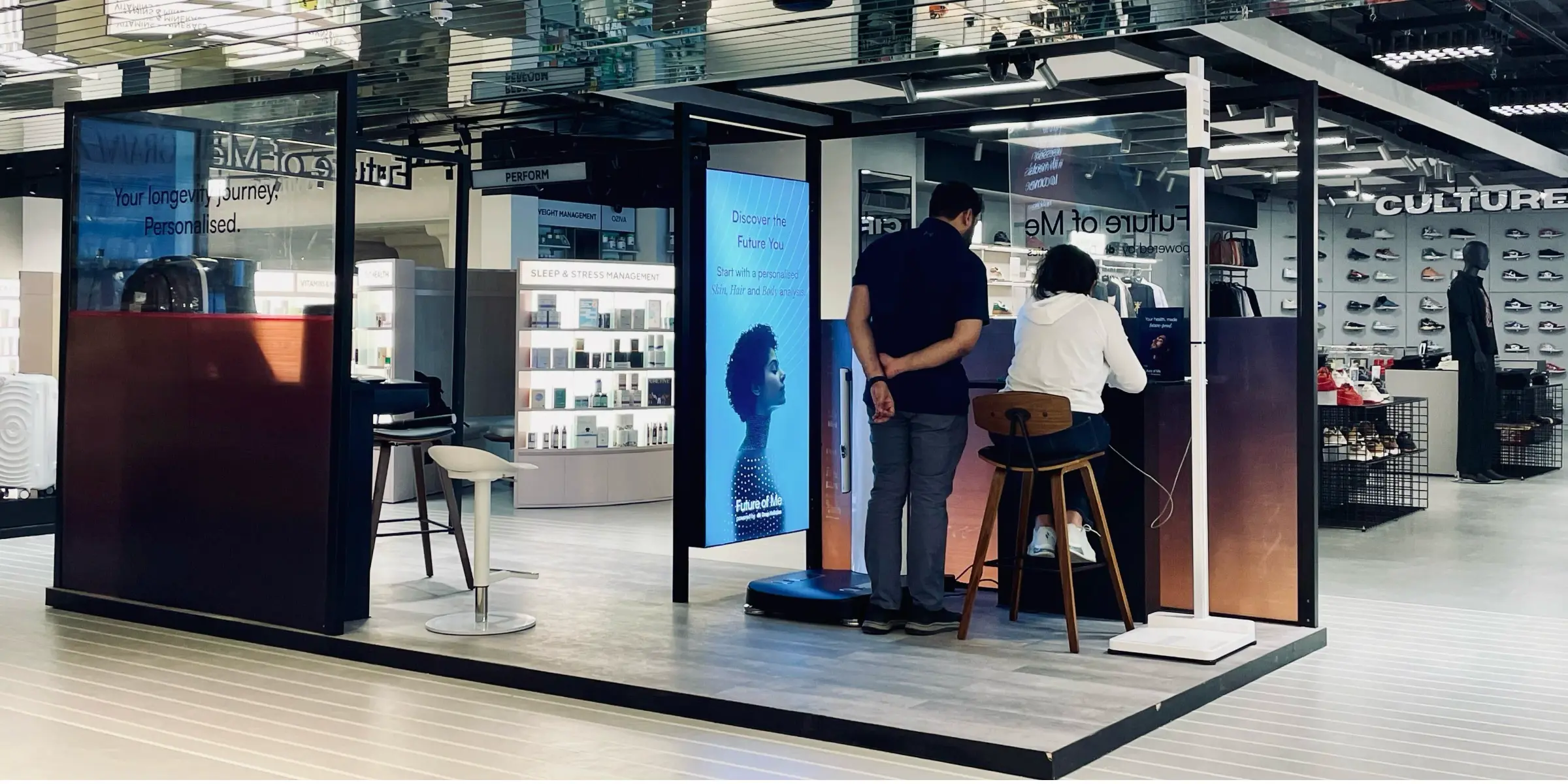
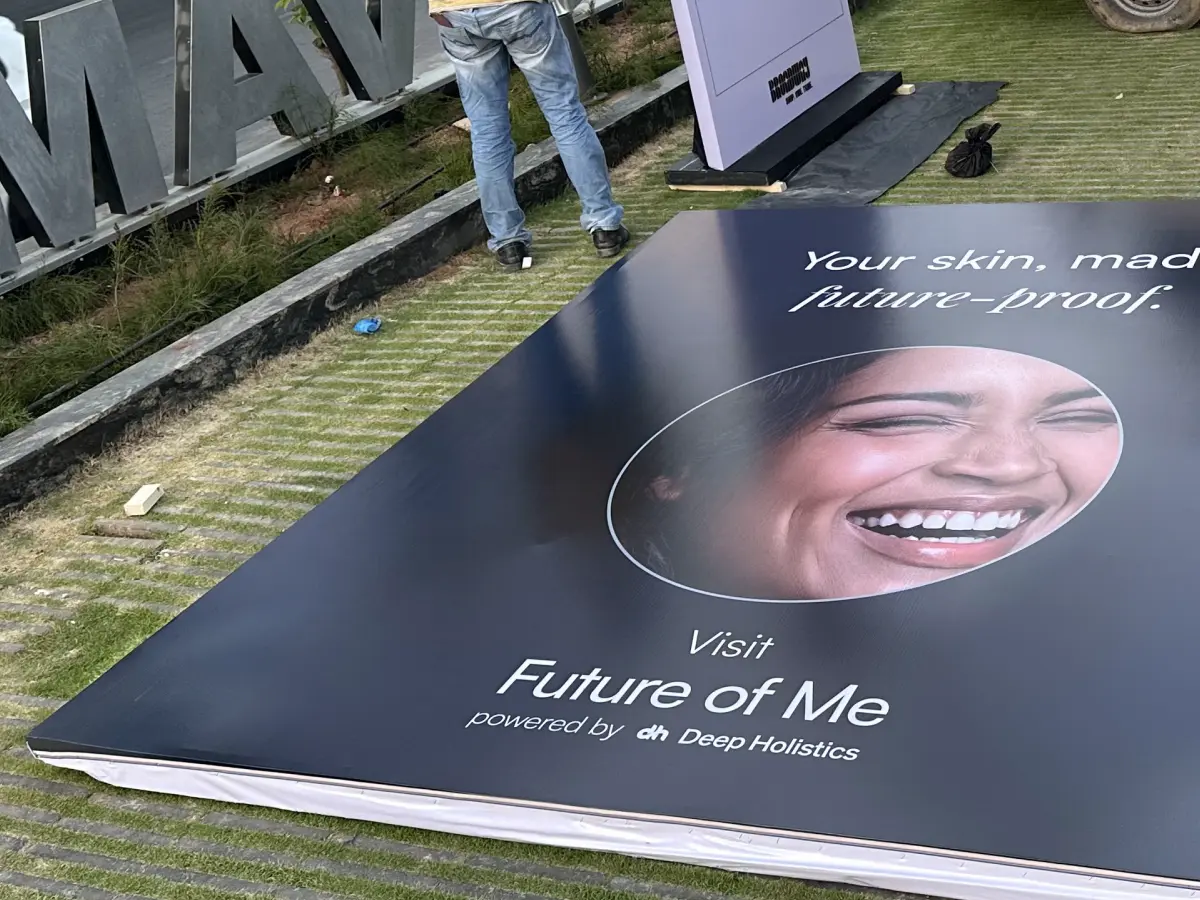
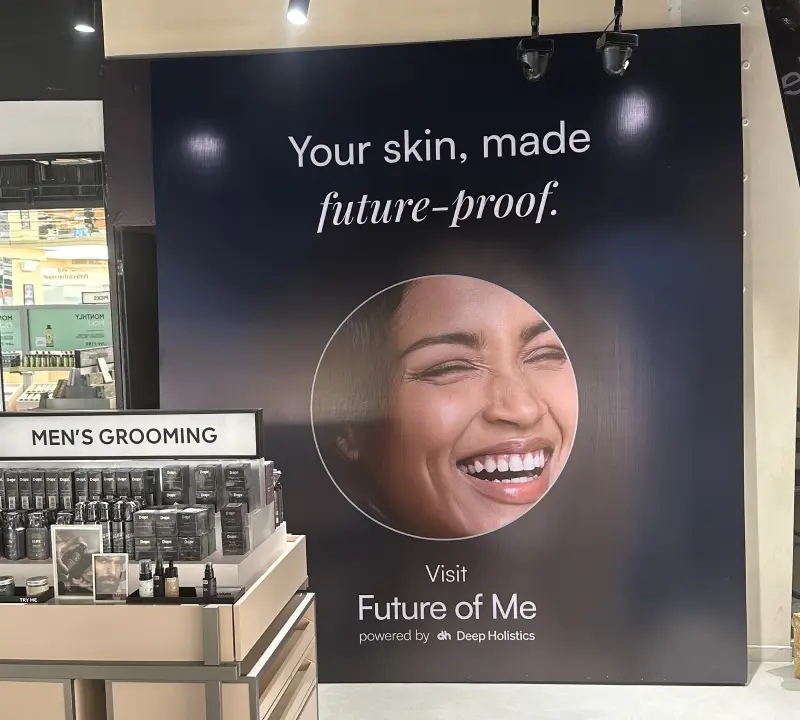
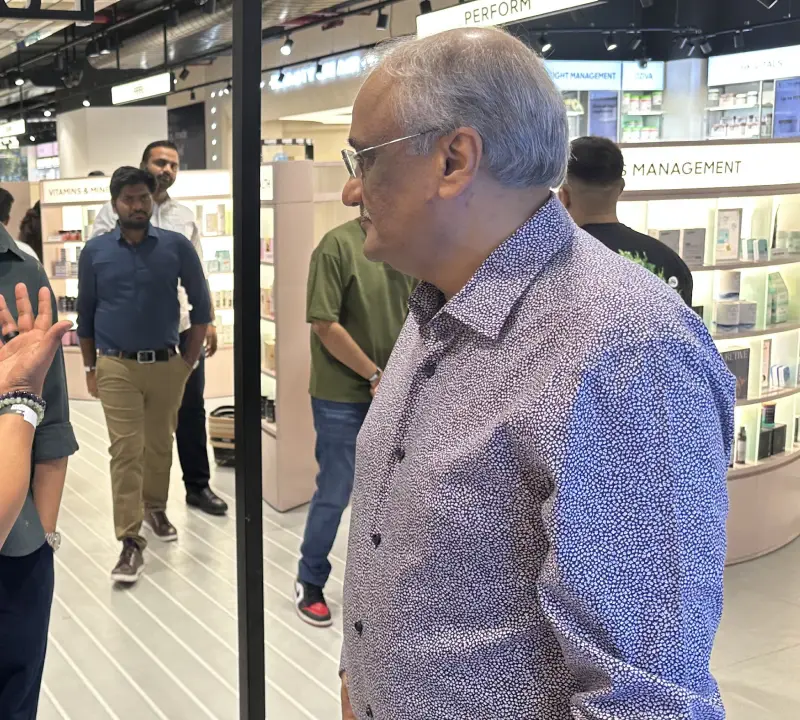
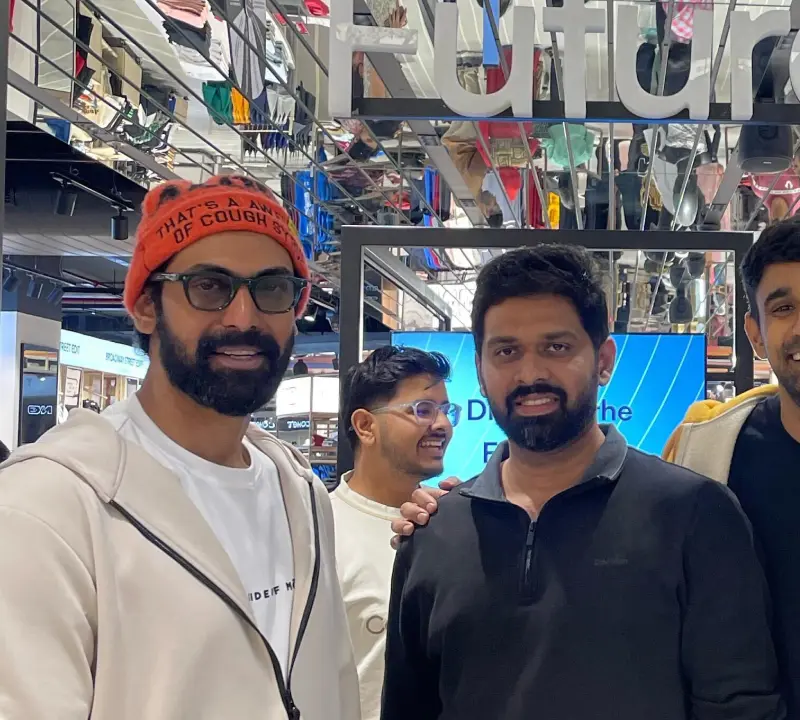
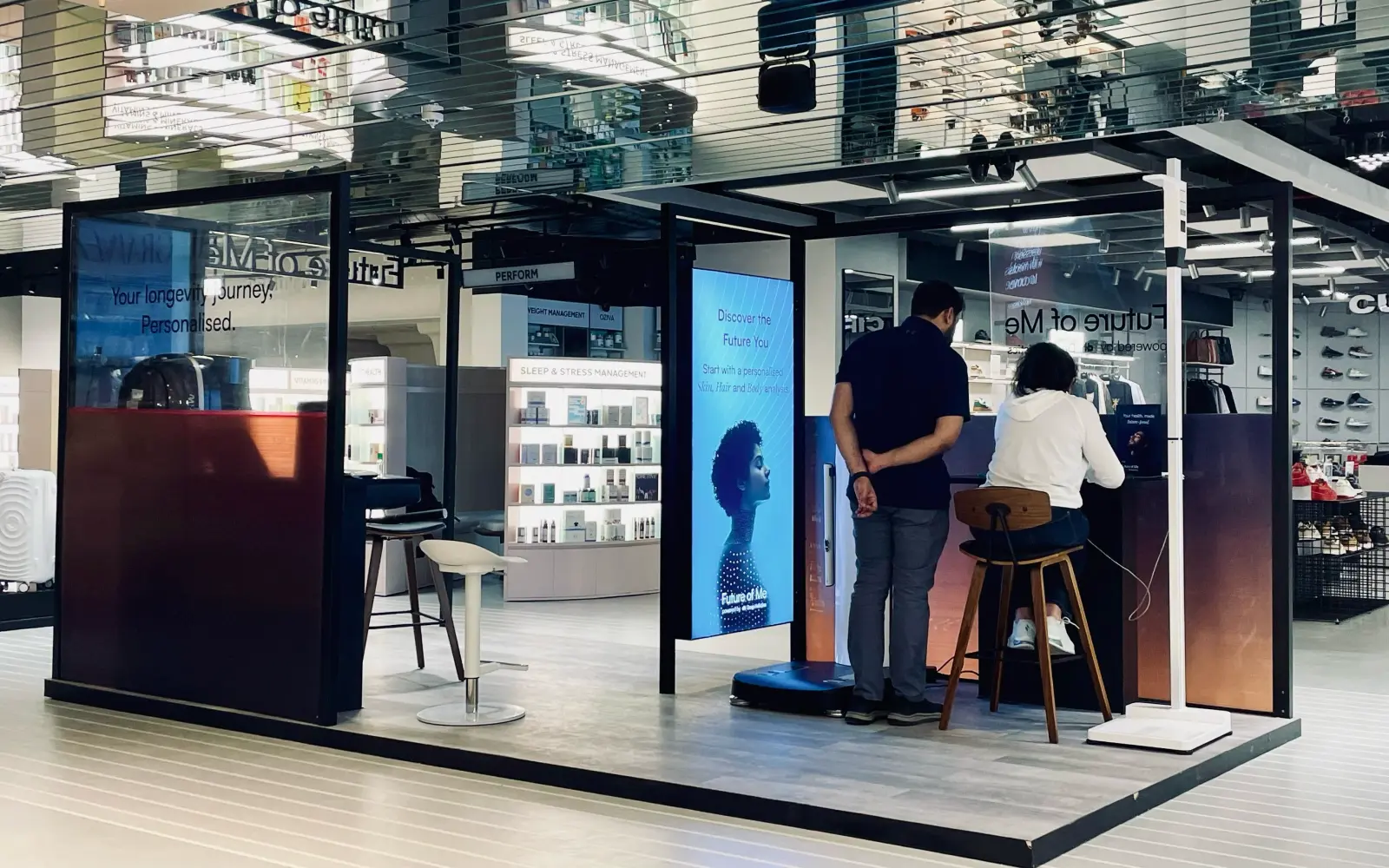
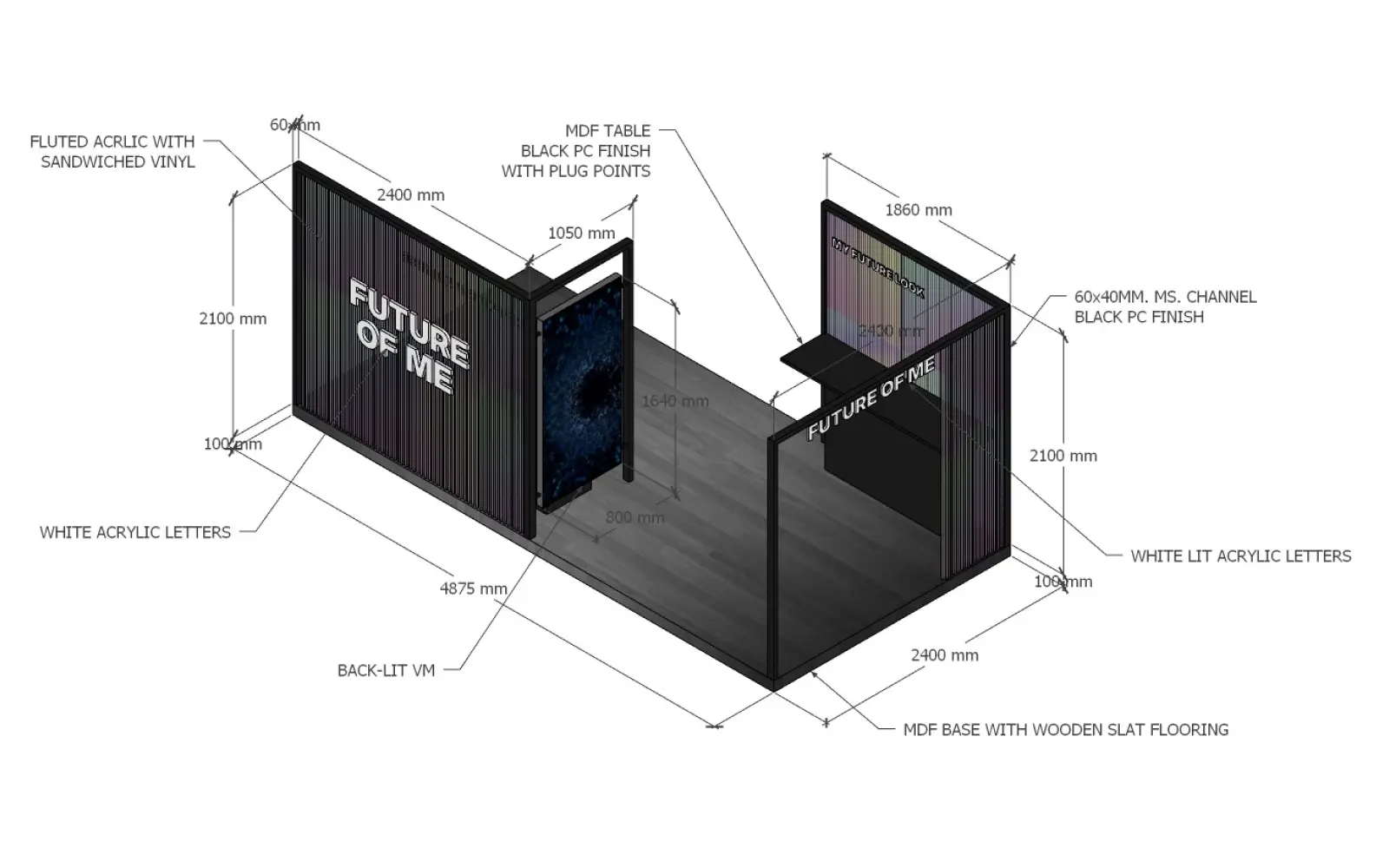
The last-mile problem in preventive health is not diagnosis. It is not data. It is not recommendations. The gap is the environment. There is nowhere that bridges knowing and doing. Future of Me places that bridge inside a retail setting. A 15ft × 8ft space at Broadway Mall, Hyderabad. Not a clinic. Not a pharmacy. A store that understands your body before it sells to you.
From curiosity to action in ten minutes
The journey is designed as a single continuous loop.
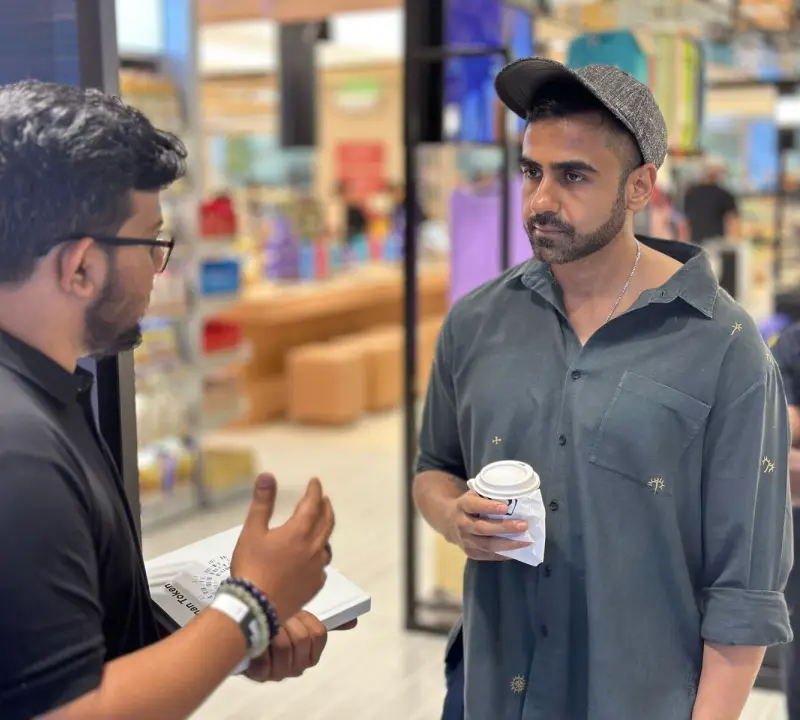
You walk in curious. The space feels like retail, not medicine. No forms. No intimidation. No preparation.
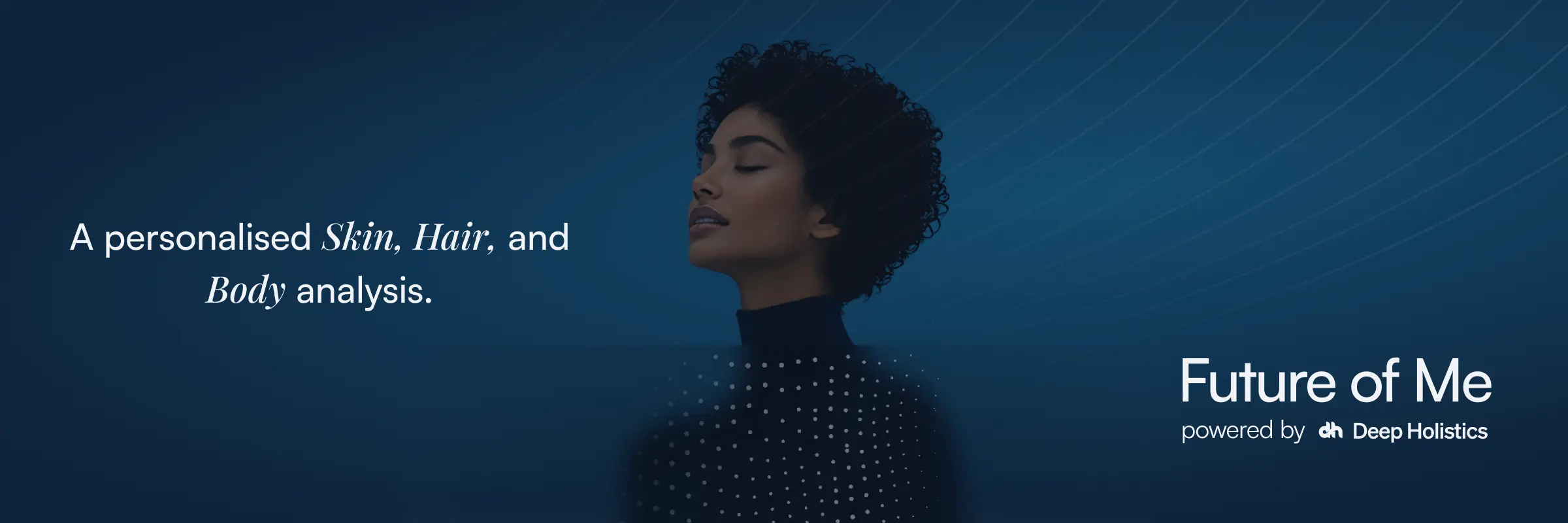
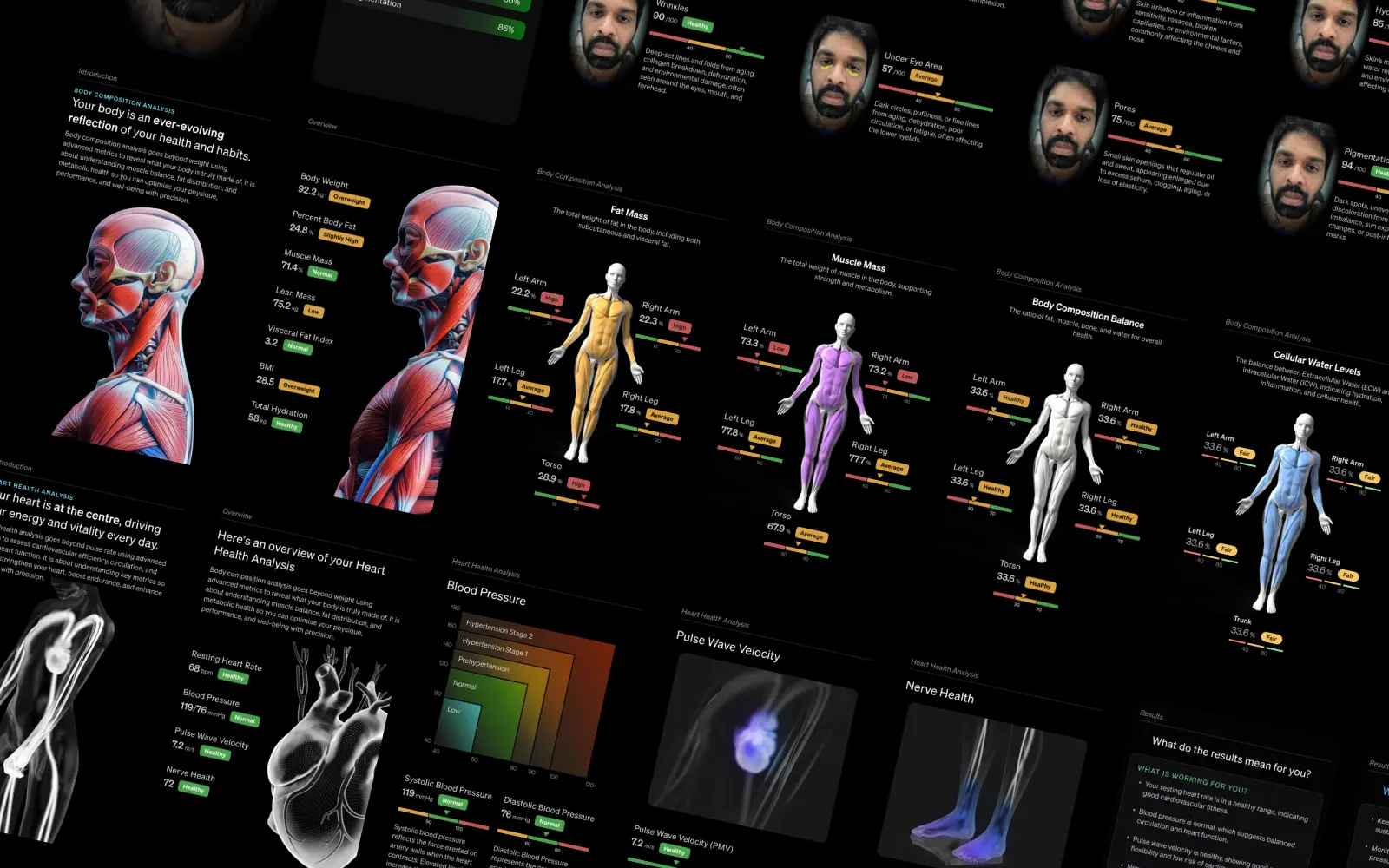
You get scanned. Three diagnostics. Facial skin analysis across ten facial zones. Hair ageing mapped at the scalp. Segmental body composition measured limb by limb. All non-invasive. All done in under ten minutes.
You see something unexpected. A skin age. An asymmetry. A pattern in your body composition you had never been shown before. This is the moment behaviour shifts. From passive to personal.
You understand it immediately. No jargon. No waiting for interpretation. The data translates itself into language you can act on.
You act. Products mapped to your results. Recommendations waiting in the same space. No search. No delay. No gap between what you just learned and what you can do about it.
What the system actually does
Future of Me is not three scans. It is a system. Diagnostics generate structured biological signals. Signals are translated into plain-language insights. Insights map directly to relevant interventions. Interventions exist within arm's reach. The value is not in any single layer. It is in removing the gap between them.
The Experience
Three scans in under ten minutes. One personalised report mapping results directly to products in the same space.
- Facial skin analysis across ten zones: skin age, pore quality, wrinkle depth, pigmentation, and moisture balance.
- Hair ageing analysis: scalp health and hair density mapped at crown, mid-scalp, and hairline.
- Segmental body composition: lean mass, fat mass, and muscle balance measured independently per limb and trunk.
What this proved
Future of Me validated a simple but untested idea: when people understand their body in the moment they can act, they do. Users moved from curiosity to purchase in the same session. Decisions felt relevant, not recommended. Engagement came from self-recognition, not persuasion.
This was not optimisation. It was a shift in context. Health moved from abstract to immediate. From delayed to actionable. From clinical to participatory.
User response
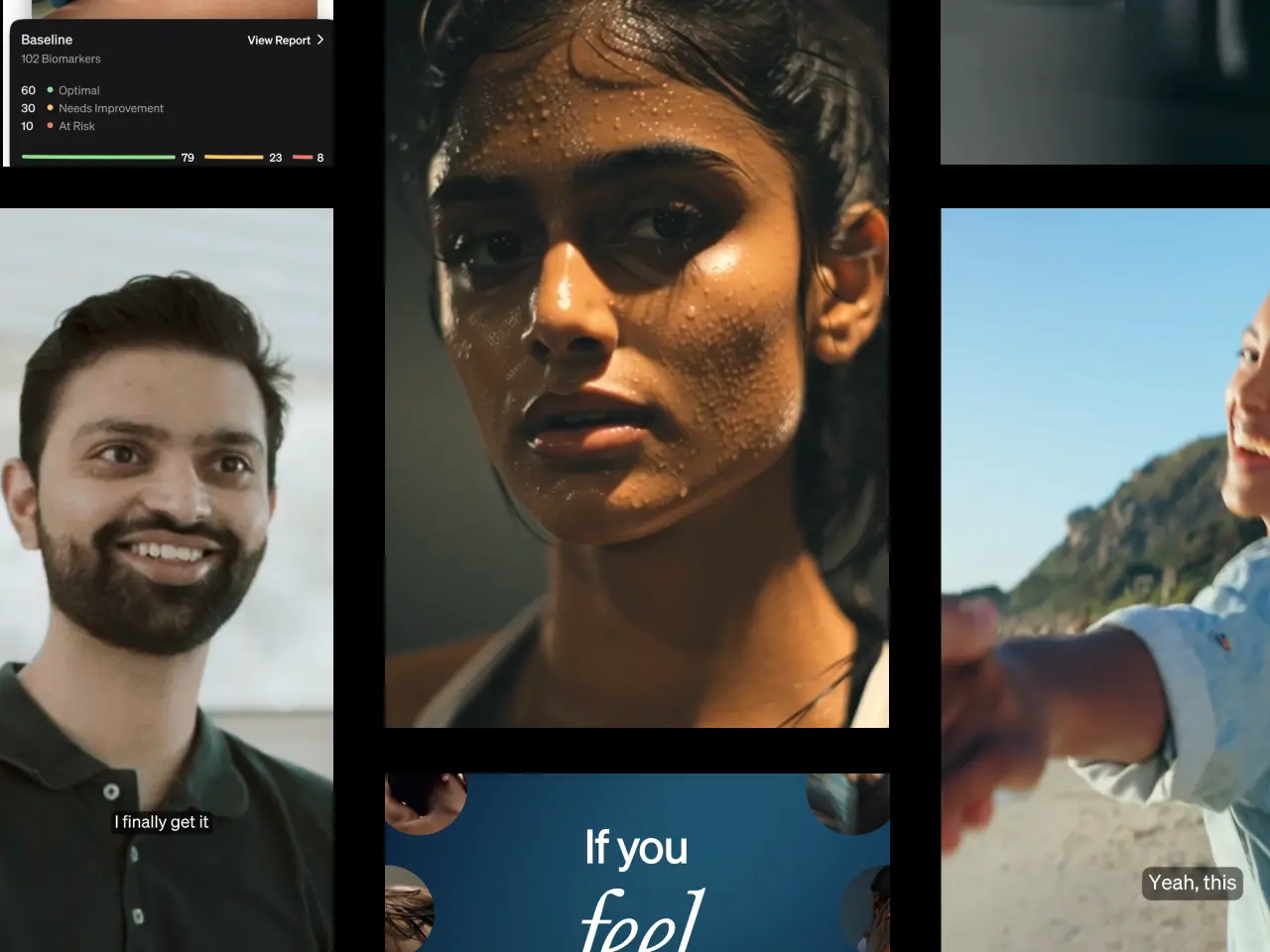
“How old is my skin, really? What it revealed surprised me: subtle wrinkles, pore changes, and signs of ageing I hadn't noticed. It made me realise how little we talk about skin longevity.”
The model
Future of Me is not a store. It is a new interface for how people make decisions about their health. The scan replaces the search. The report replaces the filter. The shelf becomes personalised. What used to move through four stages, from awareness to research to decision to action, now moves through three. Scan. Understand. Act.
More than 1,500 scans completed in a live retail environment. Conversion from insight to purchase that felt relevant because it was. Future of Me is a prototype for what retail becomes when it has access to biological data. Not as a service layer. Not as an add-on. As the foundation of how decisions are made.
When insight exists where decisions happen, action stops being effort and becomes instinct.
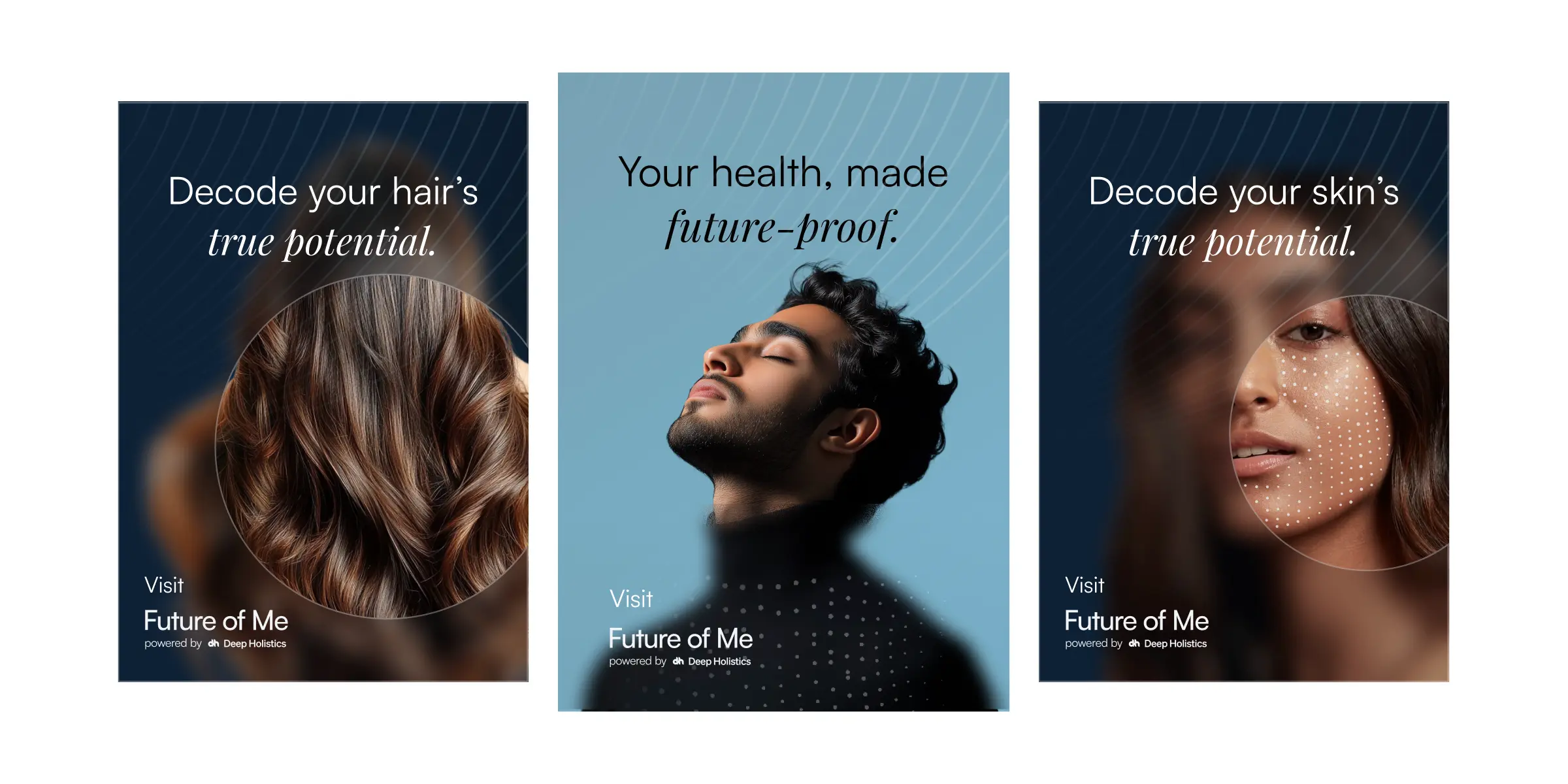
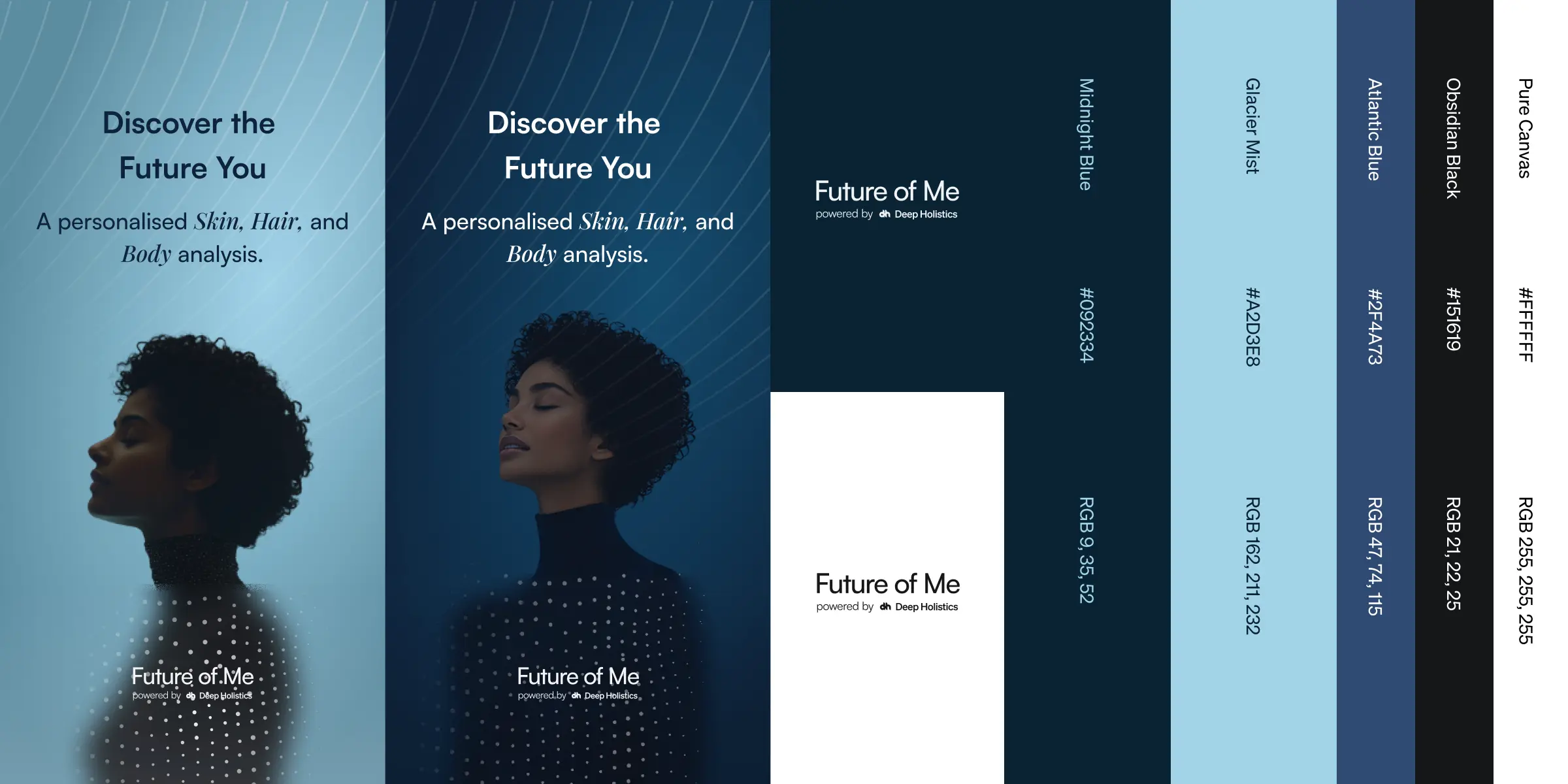
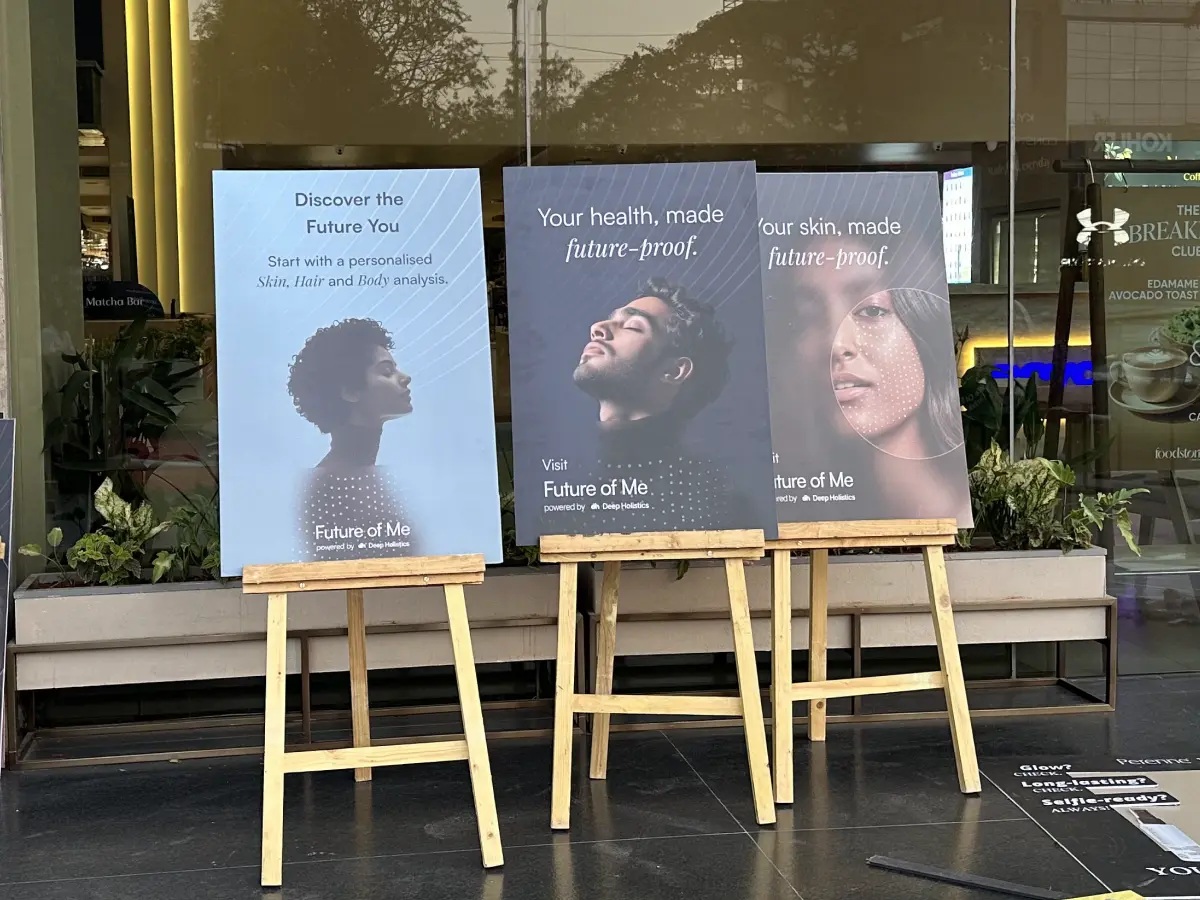
Futuristic. Diagnostic. Nothing like a health brand.
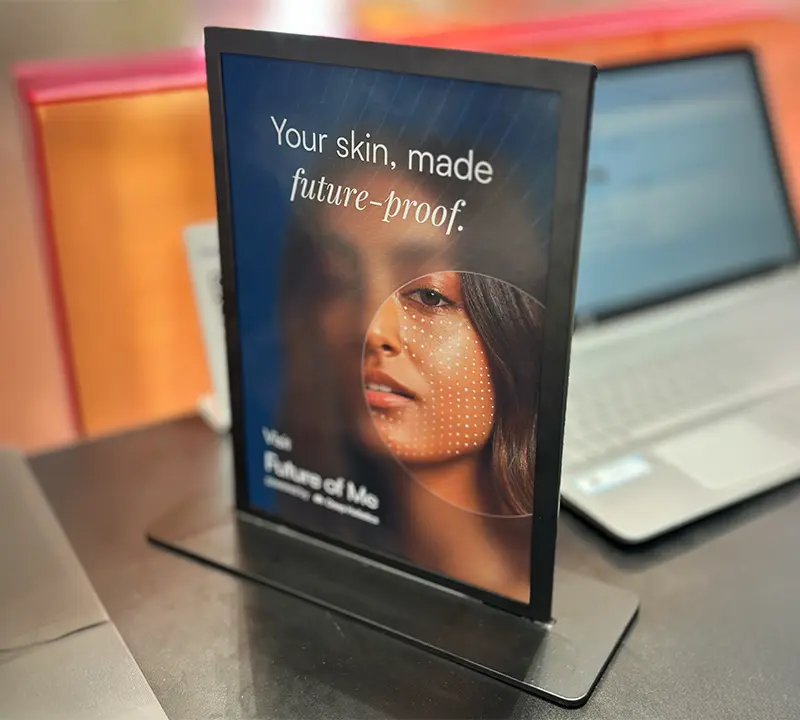
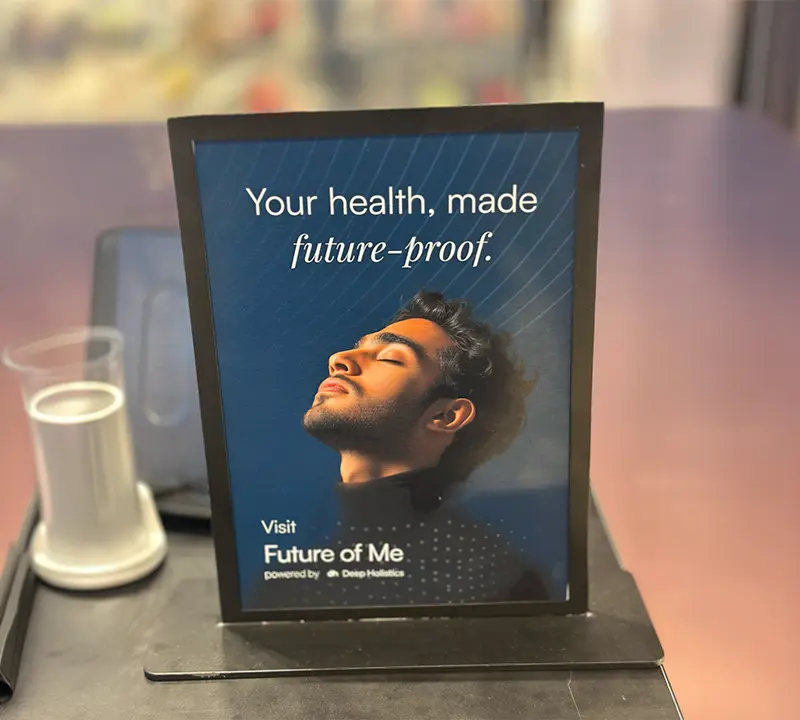
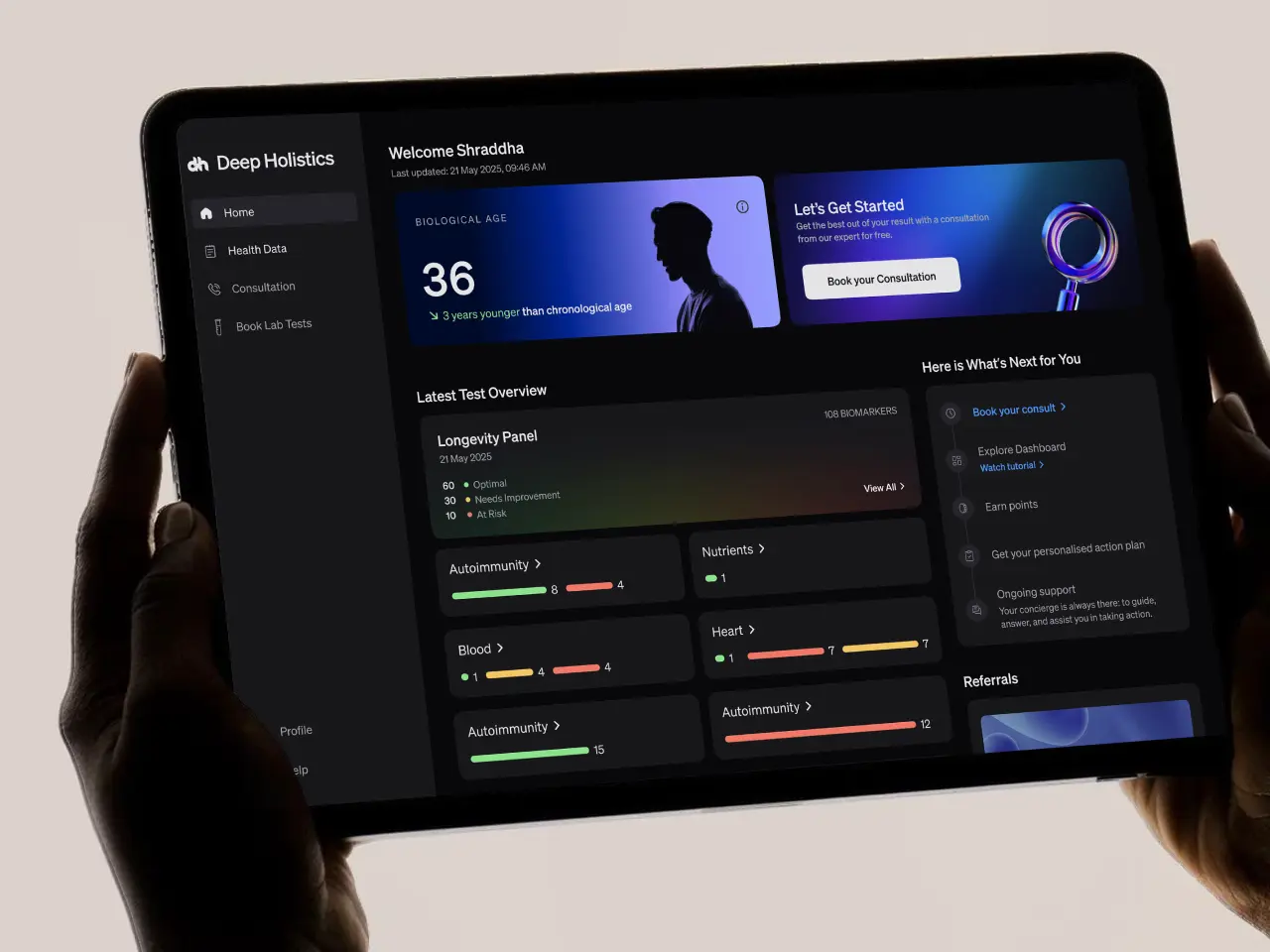
Future of Me was designed as a completely independent brand with its own logo, colour system, and typography. Nothing borrowed from Deep Holistics, and nothing like it either. The positioning was that of a futuristic diagnostic brand. A glimpse of what personalised commerce could look like when driven by real biological data. The visual identity was designed to feel closer to a premium tech product than a wellness service. Clean, precise, forward-looking. The kind of brand that signals you are being seen as a whole person, not processed as a patient.